
In this guide
Come for Sintra. Leave with a little more Portugal.
A palace can be beautiful before you know anything about it. Then someone points out a detail, explains who lived there or asks you to look again, and the building becomes more personal. You begin to see the people behind it.
The same can happen around a Portuguese table, over a glass of local wine or during a conversation between stops. You might arrive with a photograph in mind and leave remembering something you had never thought to ask.
The most rewarding Sintra cultural tours connect the places you visit with Portuguese history and life. With your own group and a local guide, there is room to follow your curiosity, enjoy the day and discover what interests you most.
Start with a story you can see
You do not need to remember a long list of dates to enjoy Sintra’s history. A doorway, a tile pattern or the view from a terrace can give you a way into it.
Royal life at the National Palace
In the historic centre, the National Palace of Sintra brings together centuries of royal life. Its Gothic, Manueline and Mudéjar features reflect different periods and influences. The Hispano-Moresque tiles are a particularly good reason to slow down and look closely.
Rather than treating a room as another stop, ask what it reveals about the people who used it. The Swan Room, the coats of arms and the palace’s great kitchen each open different conversations about status, daily life and the royal household. The official palace history offers a useful introduction.
Pena’s imagination and royal ambition
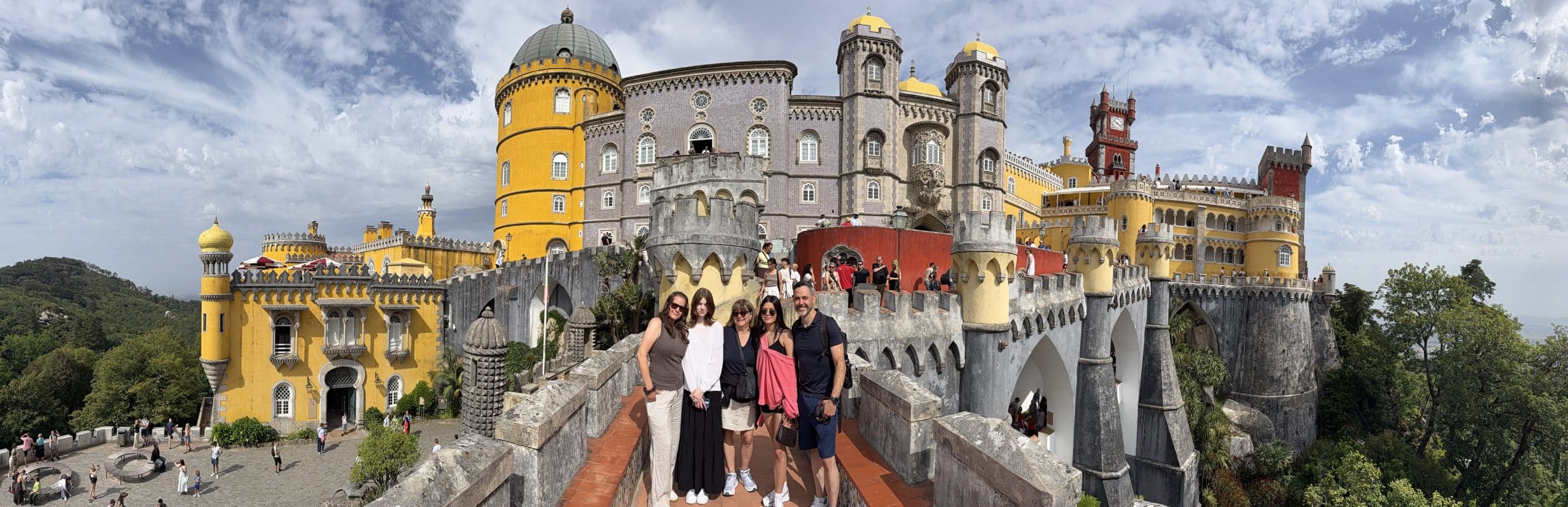
Pena tells a different story. Ferdinand II’s nineteenth-century Romantic vision brings colour, references to earlier architecture and a wooded landscape together. Looking closely at the building makes the famous photograph more interesting: what appears playful also reflects the tastes and imagination of its creators.
Our guiding at Pena takes place on the terraces, where we can explore the architecture and views together. The palace rooms are visited independently with the appropriate timed ticket. The current Park visit includes the terraces; our Pena transport and ticket guide explains the practical distinctions.
Curiosity at Quinta da Regaleira
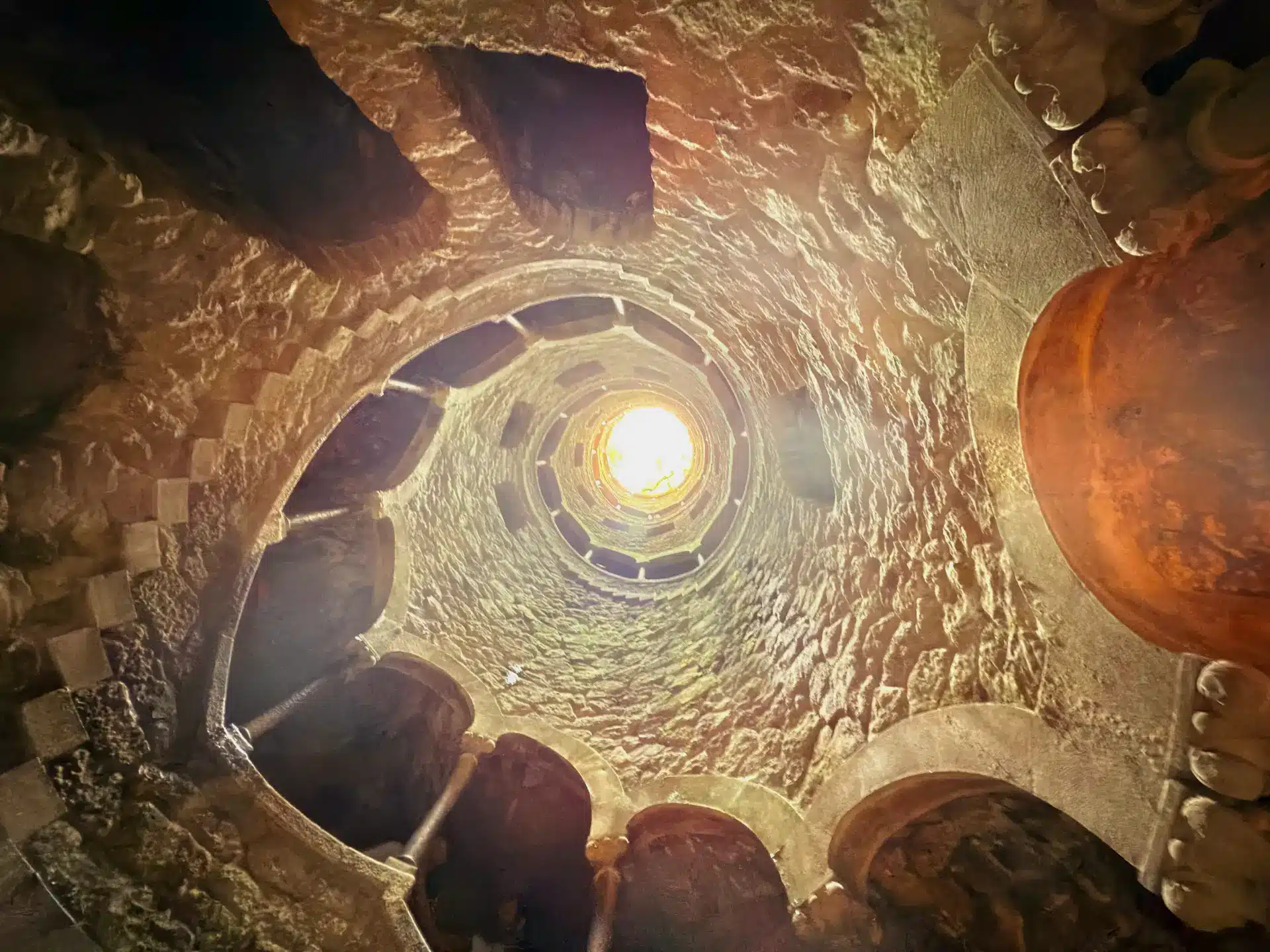
Regaleira invites a more exploratory kind of attention. A garden path, an unexpected opening or the changing perspective inside the Initiation Well can prompt questions about symbolism and the ideas behind the estate.
A good conversation also separates documented history from interpretation. A compelling story is more enjoyable when you know which parts are established and which remain open to discussion.
Regaleira’s rules prohibit external guided visits inside the Palace and the Initiation Well. Those sections are independent; the surrounding visit should be planned around that distinction. Our Regaleira visitor guide explains the experience.
These are different ways into Sintra’s culture, rather than a route requiring all three. Use our monument chooser if you are still deciding which place draws you most.
Let the conversation continue over lunch
A Portuguese lunch deserves a place in the experience. Sitting down gives you time to enjoy the food and the company, and to ask different questions from the ones that arise in a palace.
Ask how a dish is prepared, what makes it local or what your guide would choose. Talk about the ingredients you recognise and the ones you do not. Those small exchanges can turn a meal into a more memorable introduction to Portugal.
There is no need to approach lunch as another attraction to complete. If food matters to you, give it enough time. Share dietary requirements and the kind of meal you enjoy during planning, so the restaurant stop can suit your group.
A traditional Portuguese lunch is included in Full-Day All-Inclusive. The Half-Day excludes lunch. A Personalized Full-Day includes a planned lunch stop, with the meal and drinks paid separately. A tasting or other food experience belongs in the itinerary only when agreed.
Discover the landscape through Colares wine
If you enjoy wine, Colares offers a particularly local conversation. Its wine-growing traditions connect the coast, the weather and the work of the people who tend the vines.
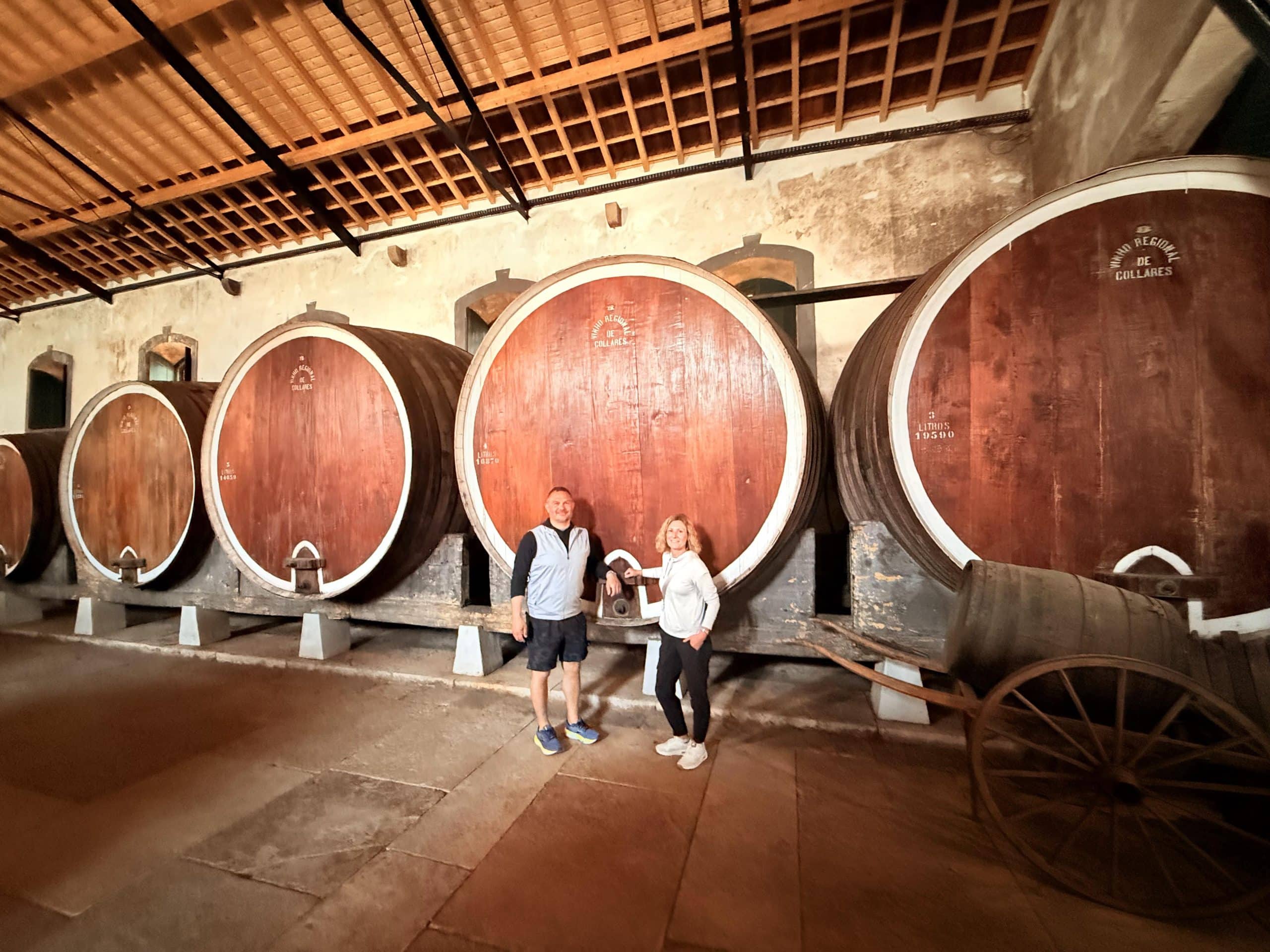
The Adega Regional de Colares describes sandy vineyards, vines growing low to the ground and reed windbreaks protecting them from the Atlantic influence. Ramisco and Malvasia de Colares give you two grape names to ask about. A tasting can help those details become something you can recognise in the glass.
Choose what interests you: tasting the wines, learning about the cellar or understanding the vineyards. These are different visits, with their own arrangements. Our Colares wine-tasting guide covers the choices, appointments and inclusions in detail.
A selected Colares tasting can be part of the agreed All-Inclusive itinerary. Confirm the specific experience and any additions with the team; in Personalized formats, tastings are paid separately. If wine is a priority, leave it real space in the day.
Bring your questions into the day
Your guide can introduce a subject, but the conversation becomes more interesting when you make it your own. Ask about something that catches your eye, connect it with a place you know or say when you would like to understand more.
You do not need specialist knowledge. “Why does this look different from the other palace?” or “What would people have used this room for?” can be the beginning of a very good visit.
There is also room for pleasure without a history lesson at every turn. Enjoy a garden, laugh together and pause for a photograph. Photographs are part of our private experiences; tell your guide when there is a moment you would love to keep.
Travel between stops is part of that shared time. An electric tuk tuk may be the vehicle for the route; the cultural experience comes from the places, conversations and people throughout the day. Discuss the vehicle and walking that suit your group when planning.
Give your cultural day a personal starting point
You can shape a cultural visit around more than one interest. The useful starting point is deciding what deserves your attention, rather than adding every place that sounds appealing.
These are starting ideas, not fixed itineraries or promises to include every stop. Our guide to personalising a Sintra tour explains how to turn your interests into a workable route.
Choose enough time to enjoy what matters
A half-day can give you a focused introduction with one clear priority. A full-day makes room for a longer conversation across different parts of the experience: a monument, Portuguese lunch and another interest that fits your route.
Our All-Inclusive experiences last four or eight hours, including pickup and return from Lisbon or Cascais, tour transport and the tickets for agreed monuments. Traditional Portuguese lunch belongs to the eight-hour Full-Day. The four-hour Half-Day includes one monument inside plus one activity, or three activities without interior visits, and excludes lunch.
Personalized Half-Day and Full-Day provide four or eight hours starting in Sintra, with private guiding, tour transport and photographs. Tickets, meals, tastings and optional transfers are paid separately.
For the duration decision, see Half-Day or Full-Day in Sintra. For the current private formats, explore the All-Inclusive experience, Personalized Half-Day and Personalized Full-Day.
Share your main interests, where you are staying and essential access needs before booking. Detailed itinerary planning follows booking. Public monuments retain their own entry rules and other visitors; a private cultural experience gives your group personal attention throughout the agreed visit.
Questions about cultural tours in Sintra
What makes a Sintra tour a cultural experience?
It connects the places you visit with Portuguese history and life. That might mean looking closely at palace architecture, understanding a royal household, enjoying local food or learning about Colares wine. The places and activities should reflect your interests and leave time for conversation.
Do I need to know Portuguese history before the tour?
No. You can begin with what catches your eye and the questions you want to ask. Your guide can introduce the context and adapt the conversation to your interests, whether you are new to the subject or already enjoy history and architecture.
Can food and wine be part of the experience?
Yes, when they are part of the agreed plan. Traditional Portuguese lunch is included in Full-Day All-Inclusive and excluded from Half-Day. A selected Colares tasting can belong to the agreed All-Inclusive itinerary; confirm the specific visit and additions. Meals, drinks and tastings are paid separately in Personalized formats.
Will our guide accompany us inside every monument?
Accompaniment depends on the site and the agreed visit. At Pena, our guiding is on the terraces; the palace rooms are visited independently with the appropriate timed ticket. Regaleira prohibits external guided visits inside the Palace and Initiation Well. Confirm the arrangements for your chosen places.
Do we need a full-day cultural tour?
A half-day can suit one clear priority. A full-day gives more room for visits, a Portuguese lunch and other interests that fit the route. All-Inclusive journeys use part of the four or eight hours. Personalized tours begin in Sintra, with any optional transfer journeys requiring their own timing arrangements.
Is the experience suitable if we prefer less walking?
Tell the team about steps, slopes, uneven ground and the breaks that suit you before choosing the route. Monument visits can still involve walking even when transport is arranged. Discuss suitable places and vehicle arrangements so the cultural experience fits your group.
What would you love to understand about Portugal?
Tell us what draws you to Sintra: the stories, the architecture, Portuguese food, local wine or a little of each. Share your date, group size and where you are staying, and we will help you choose a private format that fits. Detailed itinerary planning follows booking.
Explore your private cultural day